In honor of Pvt. Nathan R. Oakes, CSA

150 years ago, my great grandfather, Nathan Richardson Oakes, served as a private in Company D of the distinguished 32nd Mississippi Infantry Regiment in the Army of Tennessee. He participated in the great Civil War campaigns, including the battles of Perryville, Murfreesboro, Chickamauga, Atlanta, Franklin, Nashville, and Bentonville. I am writing about his engagements as well as some details about fighting for the Lost Cause. I hope to honor him and commemorate the events and individuals that contributed to making this a renowned unit in the Confederate Army of Tennessee.

Wednesday, August 29, 2012

The Battle of Richmond, 1862


Traveling on different routes out of Chattanooga, Confederate Gen. Braxton Bragg moved his army across the eastern edge of the Cumberland Plateau, while Gen. Edmond Kirby Smith began the first major battle of the Confederates' Kentucky Campaign at Richmond.

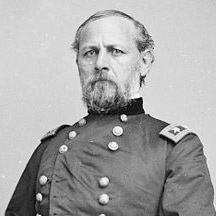
Patrick Ronayne Cleburne
On today's date in 1862, Gen. Smith converged on Federal Maj. Gen. Nelson’s forces defending Richmond. Brig. Gen. Patrick Cleburne, under whom my great grandfather will eventually serve, led the Confederate attack together with Colonel John S. Scott’s cavalry. Just after noon, Federal artillery joined the battle, forcing the Confederates to retire to Big Hill. Federal Brig. Gen. Mahlon D. Manson then ordered a brigade to march to Rogersville in the direction of the Confederates. That night Manson informed Gen. Nelson of the situation, and Nelson ordered another brigade to be ready to march.

Gen. Smith ordered Cleburne to be ready to attack the next morning, promising him reinforcements. A Confederate victory is at hand.

The battle on the 30th began with a brief artillery duel. A Confederate attack on the enemy's right, forced the Federal troops to give way and retreat to Rogersville. But the Confederates carried the day. Of the 6,500 Federal troops who went into battle, 4,300 were taken prisoner. All total, the Confederates inflicted 5,353 casualties on the Federal force, while themselves suffering only 600 killed, wounded, or missing.

Having readied his troops overnight, Confederate Brig. Gen. Patrick Cleburne marched them north, driving back Federal skirmishers on his way to Kingston, Kentucky, to confront Federal Brig. Gen. Manson’s force near Zion Church. As the day progressed, additional troops joined both sides.

The Battle of Richmond, Kentucky, was one of the most complete Confederate victories of the war in the West. However, it will soon be offset by subsequent tactical failures, ending the campaign at the Battle of Perryville.


Having distinguished himself at the earlier Battle of Shiloh, Gen. Cleburne is now the hero of the Battle of Richmond. He will continue to lead with distinction on many more battlefields, rightly deserving the title, "The Stonewall of the West."


On this same day, the leadership in Washington D.C. is in full panic mode. The Army of Northern Virginia under Gen. Robert E. Lee has just defeated Maj. Gen. John Pope’s army at the Second Battle of Bull Run (or Second Manassas) in Virginia. And now the news of the Federal defeat in Kentucky.

Tuesday, August 28, 2012

Invasion of Kentucky: The Generals

Maj. Gen. Don Carlos Buell
Don Carlos Buell, an Ohio native, served with distinction in the Mexican War of 1846-48. When the Civil War began, he became a brigadier general in the Army of the Potomac. In November 1861, Gen. George McClellan recommended Buell to replace William T. Sherman as commander of the Department of the Ohio for operations to liberate East Tennessee from the Confederacy. Believing that he didn't have the forces necessary to control all of Tennessee and that Nashville was militarily more important, Buell moved on that capital unopposed, occupying Nashville on Feb. 25, 1862.

By the spring of that same year, as the Confederate Army under Gen. Albert Sidney Johnston was retreating to Corinth, Mississippi, Buell was in pursuit. Arriving at Pittsburg Landing on April 7, the second day of the bloody Battle of Shiloh, Buell played a key role that ensured a Union victory, but one that embarrassed the commanding general, U.S. Grant, sparking one of many after-battle controversies.

After Shiloh, Buell served under General Henry W. Halleck in the Union advance on Corinth, after which he was sent to capture Chattanooga, to hold that city and head off a Confederate invasion into Kentucky. That invasion, led by Confederate Gen. Braxton Bragg, began this date 150 years ago today.
Gen. Braxton Bragg

Also by this date, Gen. Bragg had reorganized his 30,000-man Army of Mississippi into 2 wings. The Right Wing is commanded by Maj. Gen. Leonidas Polk, and consists of Cheatham’s and Wither’s infantry divisions and Lay’s Cavalry Brigade. The Left Wing is commanded by Maj. Gen. William J. Hardee, and is made up of Simon Buckner’s and Patton Anderson’s infantry divisions, and Wheeler’s Cavalry Brigade. Wood's Brigade, including the 32 Mississippi Infantry Regiment, is placed in Buckner’s Division. They will begin their invasion today by crossing the Tennessee River. Soon, the Confederates will be marching through Kentucky before Buell or Washington D.C have any idea where they are or what they are up to.


Gen. Edmund Kirby Smith
Bragg departs believing that he has the support of fellow commander, Gen. Edmund Kirby Smith, to join forces in cutting Buell's line of communication by moving from Chattanooga to take Nashville. But he will soon learn that Smith has different plans. Smith will lead his army of 20,000 into Eastern Kentucky with Lexington as his immediate objective. Although Bragg was Smith's senior in rank, he will be compelled to make Kentucky his objective and forced to react both to Smith's movements and the enemy forces he encounters.

Bragg’s invasion of Kentucky will be practically simultaneous with Robert E. Lee’s invasion of Maryland. These 2 movements will cause ominous foreboding and dismay in the North. The war will come very close to the Northern people when Confederate detachments soon appear near Covington, in sight of Cincinnati, and also across the Potomac River into the Maryland.

But on Thursday, August 28, barely 17 years old, my great grandfather, Pvt. Nathan Oakes of the 32nd Mississippi Infantry Regiment along with Great Uncle William Turner, crossed into Tennessee with the Confederate invasion force. They will soon see fighting in Kentucky. The excited soldiers march from Chattanooga singing hymns and, of course, "Dixie." In time, though, their songs will be muted by the arduous trek up from the Tennessee Valley, through the mountains on the eastern edge of the Cumberland Plateau.

Bragg's Kentucky Campaign, 1862
Source: Civil War Trust

At the peak of the campaign, the Confederate army will battle the Federal army as far north as Perryville in October. Although Buell will check the Confederate advance, unfortunately for him he does not pursue the retreating Confederates quickly enough following that battle on October 8. As a consequence shortly thereafter, Buell will be relieved of his command and replaced by Gen. William Rosecrans.

Sources: Army of the Heartland: The Army of Tennessee, 1861-1862, Thomas Lawrence Connelly; An American Iliad: The Story of the Civil War, Charles P. Roland; Stone's River: The Turning-Point of the Civil War, Wilson J. Vance

Sunday, August 26, 2012

Occupied Homefront: Kossuth, 1862

While Great Grandfather Nathan Oakes was away with the Confederate Army in Chattanooga, his hometown of Kossuth, Mississippi was occupied by Federal forces. It wasn't a peaceful time for families back home. On this date 150 years ago, 2 companies of the Union 7th Kansas Regiment under Capt. Malone, while scouting the countryside around Kossuth to the Hatchie River, were ambushed by Rebels about 5 miles from Kossuth. Four of his men were killed and 8 wounded, while his force killed 2 and wounded several of the Rebel attackers. The Union dead were buried in Kossuth.

Source: Official Records, Vol. 17, Part 1, pp. 42-43

Tuesday, August 21, 2012

Pvt. Nathan R. Oakes of the 32nd Mississippi Infantry turns 17

On today's date in 1862, my great grandfather, Nathan R. Oakes, a private in the Confederate Army of Mississippi (soon to be renamed "The Army of Tennessee") turned 17 years of age. Having reenlisted earlier in March, following the fall of Forts Henry and Donelson, Pvt. Oakes served the last part of his 17th year in the newly formed 32nd Mississippi Infantry Regiment, participating in various skirmishes and  maneuvers in and around Corinth, Mississippi. In just the past few days, however, he along with nearly 30,000 other troops, underwent an arduous rail transfer from Tupelo to Chattanooga. Now on his birthday, 150 years ago today, he is but a week away from his first real military campaign to Kentucky. Gen. Bragg is currently moving his army to a position above Chattanooga in preparation for the Kentucky invasion.

Saturday, July 28, 2012

32nd Mississippi Infantry Regiment is transferred to Chattanooga, 1862

In July of 1862, the Army of Mississippi was regrouping in Tupelo following its evacuation from Corinth in the closing days of May. Gen. Braxton Bragg, having only recently assumed command of the army from Gen. P.G.T. Beauregard, was deciding which would be his army’s next campaign: to attempt retaking Corinth or to advance against Union Gen. Buell's army through Middle Tennessee.

Maj. Gen. Edmund Kirby Smith had just decided to take his Army of East Tennessee, about 10,000 men, to invade Kentucky from Eastern Tennessee. He hoped to advance Confederate support in that border state and to confront Union forces under Maj. Gen. Don Carlos Buell beyond the Ohio River. To succeed in his plan, Smith needed to be reinforced by Bragg's Army of Mississippi.

After considering his options, Bragg agreed to join forces with Smith’s army in a great “Confederate Heartland Offensive,” which would avert Union attention away from the strategic strongholds of Vicksburg and Chattanooga. But first, it meant relocating Bragg's 30,000-man Army of Mississippi almost 800 miles to Chattanooga, Tennessee. It would become the largest Confederate troop movement by railroad during the war.

Beginning July 23, 1862, Bragg began moving his infantrymen on various trains on the Mobile & Ohio line, while his cavalry, artillery, and supply wagons moved by road. It would be a tortuous trip from Tupelo through Mobile and Montgomery, through Georgia to Chattanooga. Amazingly, with his army and cavalry reassembled in Chattanooga, Bragg will be ready to move with Smith’s forces toward Kentucky by the end of August.

According to company reports, my great grandfather’s 32nd Mississippi Infantry Regiment departed from Tupelo on this date, 150 years ago, via Mobile and Montgomery, to West Point, Atlanta, and Dalton, arriving near Chattanooga on August 3. The company will camp in various places around Chattanooga until the Army departs on August 28 on its invasion of Kentucky.

Thursday, June 28, 2012

"Old Reliable" Gen. Hardee

As one historian observed, compared to Corinth, camp life at Tupelo in 1862 was serene, even dull. The weather was hot and dry. The Confederate army’s morale improved along with the standard of hygiene and the quality of the rations. The army, including the 32nd Mississippi Regiment, also finally had time to properly drill under "Old Reliable" Gen. Hardee’s direct supervision.

Gen. William J. Hardee
Born in Georgia, William Joseph Hardee was a career U.S. Army officer by the time the war broke out. Earlier in the Mexican-American War, Hardee, like many officers in the Army of Tennessee, served under Zachary Taylor, who in 1848 would be elected President of the United States. After the Mexican-American War, Hardee returned to West Point, serving as a tactics instructor, then as commandant from 1856 to 1860. Among other accomplishments he published the best-known drill manual of the Civil War, popularly known on both sides as Hardee's Tactics.

Hardee resigned his U.S. Army commission in January 1861, after his home state of Georgia seceded. Joining the Confederate army as a colonel, by 1862, he had risen to the rank of lieutenant general. Hardee was leading a force in Arkansas when he was ordered to join Gen. Albert Sidney Johnston's army as a corps commander, the position he held in the Battle of Shiloh.

Hardee continued to serve in the Army of Tennessee through most of its famous campaigns and battlefields—Perryville, Murfreesboro, Tullahoma, Missionary Ridge, and the Atlanta Campaign—until September 1864. After leading forces against U.S. Gen. Sherman and his March to the Sea, Hardee rejoined the remnants of the Army of Tennessee under Joseph Johnston in its final days of fighting in the Carolinas Campaign. He participated in the Battle of Bentonville in March 1865, where his 16-year-old son was mortally wounded. Hardee surrendered under Johnston along with the surviving elements of the army at Durham Station on April 26, 1865.

The "Hardee Flag"


The famous "Hardee Flag" first flew over the corps at the Battle of Shiloh. From then on, units of Hardee's Corps each flew a version of the battle flag pattern. Flying over one such unit—Patrick Cleburne's Division—was the flag Union soldiers remarked that they most dreaded to see on the battlefield. Great Grandfather Oakes's 32nd Regiment was one such unit that proudly served under that renowned flag in Cleburne's Division.


Sources: The Third Battalion Mississippi Infantry and the 45th Mississippi Regiment: A Civil War History, David Williamson; The Confederate Veteran, Vol. 17 (January 1909-December 1909)

Wednesday, June 27, 2012

Bragg assumes command of the army

Braxton Bragg graduated from West Point in 1837, ranking 5th in his class. He was commissioned as a second lieutenant in the 3rd US Artillery. He fought in the 2nd Seminole War of 1835-1842, and later distinguished himself in the War with Mexico, being promoted up the ranks to lieutenant colonel. During that war, Bragg became friends with Col. Jefferson Davis, who years later became President of the Confederacy. After the Mexican War, Bragg retired to the life of a sugar planter in Louisiana, but he remained active with the state militia, rising to the rank of colonel.

Following Louisiana's secession from the Union on January 26, 1861, Bragg was promoted to major general and given command of militia forces in New Orleans. As the Civil War was coming to Louisiana, Bragg was promoted to major general that same year. The spring of 1862 found Bragg leading his men north to Corinth, Mississippi, to join Gen. Albert Sidney Johnston’s Army of Mississippi. He was a corps commander in the Battle of Shiloh (April 6-7, 1862), and following Johnston’s death on that battlefield, Bragg became Gen. P.G.T. Beauregard’s second-in-command.

On this date in 1862, at camp at Tupelo, Mississippi, Bragg officially assumed command from Beauregard. By now Bragg had a well-earned reputation as a strict disciplinarian and an obsessive follower of military procedure. The appointment was not well received by many in the army, primarily due to his widely known harshness as a corps commander, as well as his public distain for many of his subordinate officers. Throughout the upcoming campaigns, Bragg will fight nearly as bitterly with some of his subordinates as he will against his Northern enemy, a fact that will cost his Southern army dearly. His senior generals—in particular, William J. Hardee, James Longstreet, and Leonidas Polk—have so little confidence in him that they will try more than once to have him replaced. One of his cavalry generals, Nathan Bedford Forrest, held Bragg’s leadership in such low regard that he once threatened Bragg with his life. And another of his generals, former USA Vice President, John C. Breckinridge, almost challenged Bragg to a duel because of his mismanagement at Murfreesboro.

Although Bragg's leadership style invited many detractors, he generally was respected for his field command and excellent ability for organization. He had other command characteristics, too, that the Confederate army desperately needed. And while he eventually will lose the support of his generals, backing will come from above in the form of his old friend, President Davis. It is Davis who will save Bragg’s command, at least for the next year and a half. However, according to one historian, Grady McWhiney, Davis's decision to retain Bragg will become "a major contribution to Confederate defeat."

But 150 years ago today, Gen. Braxton Bragg became the commanding general of the 40,000-man Army of Mississippi (a.k.a. Army of Tennessee). His blunders, many of which will result in bloody disasters for the common soldiers like my great grandfather, Nathan Oakes, are yet to come.

Source: Braxton Bragg and Confederate Defeat, Grady McWhiney

Wednesday, June 6, 2012

March to Tupelo, 1862

Gen. 
P.G.T. Beauregard's Confederate army, including my great grandfather Nathan Oakes's regiment, having successfully withdrawn from its threatened position in Corinth to Baldwyn, Mississippi on May 30, is moving again on this date in 1862, to its new base in Tupelo, 19 miles farther south. It will remain in Tupelo until late in July. From there it will be transported to Chattanooga for the summer campaign into Kentucky.

The 6th Tennessee Cavalry, Great-Great Grandfather David C. Neal's unit, having been cut off in the withdrawal from Corinth, joins up with the army in Tupelo.

Wednesday, May 30, 2012

Evacuation of Corinth, May 29-30, 1862

On the 29th and 30th of 1862, the 32nd Mississippi Infantry Regiment was withdrawn from Corinth with the Confederate Army south to Baldwyn, where it stayed through June. One of the men of my great grandfather’s regiment recalled: “Many boys passed their homes on the retreat.” Indeed, Great Grandfather Oakes was one of those who passed within sight of his family’s farm in Kossuth on that march south.

Col. Lowrey reported of his 32nd Mississippi that many of the men were sick and recuperating at home in communities around Corinth. When the army evacuated, those too sick to march with the army were cut off when enemy captured the city. Many of these later were able to make their way to rejoin their units.

At daylight on the 30th, Union Gen. Halleck becomes aware of the Confederate evacuation and vainly sends troops in pursuit. Alas, his one real opportunity for destroying Bragg's army slips through his fingers.

Sources:  Corinth Herald, May 17, 1902; 32nd Mississippi Regimental Return, June 1862

Tuesday, May 29, 2012

Beginning of the evacuation of Corinth, MS, 1862

During the very warm night of May 29th, 1862, without detection by the enemy, Confederate Gen. Gen. 
P.G.T. Beauregard masterfully withdrew his army of 45,000 troops to a point 7 miles south of Corinth, across Tuscumbia Creek. Various units from my great grandfather’s division took part in guarding the turnpike bridge over the Tuscumbia Creek while the army passed, then they burned the bridge, then followed army to Baldwyn, Mississippi. Other units guarded the railroad bridge, and after all the cars passed over, burned this bridge also. Jessee Cheeves, of Great Grandfather's 32nd Regiment, remembered guarding the wagon train as the Confederate army evacuated Corinth.

The 6th Tennessee Cavalry Regiment—of which another of my ancestors, Great-Great Grandfather David Crockett Neal was a member—was cut off by the Federal forces during the evacuation. But it cut it's way through and followed the army on to Tupelo.

Sunday, May 27, 2012

Another Skirmish for the 32nd Regiment

Awaiting the inevitable conflict with Union forces from the north following the Battle of Shiloh, Great Grandfather Nathan Oakes’s 32nd Mississippi Infantry Regiment in Gen. William Hardee's Corps, participated in a minor fight with the enemy on the Payne farmAnother northeast of Corinth, Mississippi. According to the regiment’s colonel, Mark P. Lowrey, while not having yet seen action, the regiment did act as skirmishers on while on outpost duty here in 1862. Lowrey reported that on this date, 2 privates were wounded and captured—1 from Great Grandfather's Co. D, John Dilworth, and another from Co. C, James Spain, who later died.* The next day the 32nd Mississippi was called back to the town.

Photo by Mark Dolan, 2007
By the 28th, it was clear that the Federals had advanced to within a few hundred yards of the Rebel entrenchments around Corinth. Con-federate Gen. P.G.T. Beauregard authorized Hardee to conduct a reconnaissance of Federal move-ments. Hardee sent Gen. Patrick Cleburne with 4 regiments out the Farmington road where they engaged in heavy skirmishing with the enemy.

By now, Gen. Beauregard decided to abandon Corinth and will evacuate on the 29th.


          __________________________________________________________________


Photo by Mark Dolan, 2007

The Corinth Civil War Interpretive Center is operated by the National Park Service as part of the Shiloh National Battlefield. The exhibits of both the Siege and the later Battle of Corinth are helpful and informative (and it's much more attractive inside than the architecture at first reveals). However, it was the research library that was the most useful to us when we visited a few years back in our search for Great Grandfather Nathan Oakes in the 32nd Mississippi Infantry Regiment.

We were allowed extensive use of the center’s collection of new and reprinted volumes of the period of the War Between the States. Ranger Tom Parson was exceptionally helpful and made copies of several pages of books we were interested in. Pat took this picture of me in front of the library wall in the research room.


* A number of men from the regiment died of sickness and disease in the early days at Corinth. However, the death of Pvt. James Spain, following his wounding at Bridge Creek, was likely the first death resulting from wounds received in battle.

Source: 32nd Regimental Return, June 1862; Corinth Herald, May 17, 1902; Stonewall of the West, Craig L. Symonds

Tuesday, May 15, 2012

Great Uncle Turner enlists in the 32nd MS Regiment

Over the past few months, coinciding with the 150th anniversary of Civil War battles over the remaining 3 years ahead, I have been tracking my Great Grandfather Nathan Richardson Oakes from his enlistment in the Confederate Army in March 1862, to his surrender in April 1865. I also had other family members who fought in that war. Great Uncle William D. Turner enlisted in my great grandfather's Co. D of the 32nd Mississippi Infantry Regiment  Uncle Turner had just completed 12 months of service in the 9th Mississippi Regiment.

Both ancestors will survive the war, and finally back in Mississippi on June 1, 1865, Great Grandfather Oakes will marry his prewar sweetheart Martha Ellen Turner, who was also "Billy" Turner’s younger sister.

Great Grandmother Martha Oakes and her brother,
William "Billy" D. Turner, years after the war